
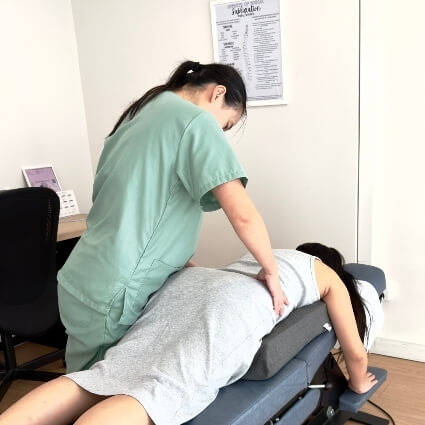
 The chiropractor who adjusts less might be doing more.
This is the one that surprises people. They come in expecting to get cracked all over. They leave having received two, maybe three specific adjustments. And they ask — is that it?
Yes. That’s it. And here’s why that’s intentional.
The spine isn’t a row of dominoes where you knock them all down every time. Each vertebra has a job. Each segment of your nervous system has a territory. When we identify the specific subluxations — the joints that are actually causing interference — those are the only ones that need to move.
Adjusting a joint that doesn’t need it? At best, pointless. At worst, you’re introducing motion into an area that was compensating for something else, and you’ve just destabilised the pattern your body was holding together.
We’re trained through PX Docs, MST, and Syntropy — all of which are built around this principle. Find the primary. Adjust the primary. Let the nervous system respond. Come back and check the data.
It sounds almost too simple. But restraint in clinical practice is actually harder than doing everything. It requires knowing what you’re looking at. It requires trusting the scan over the habit.
Ready to see what your nervous system is actually doing? Book in for a scan and consultation.